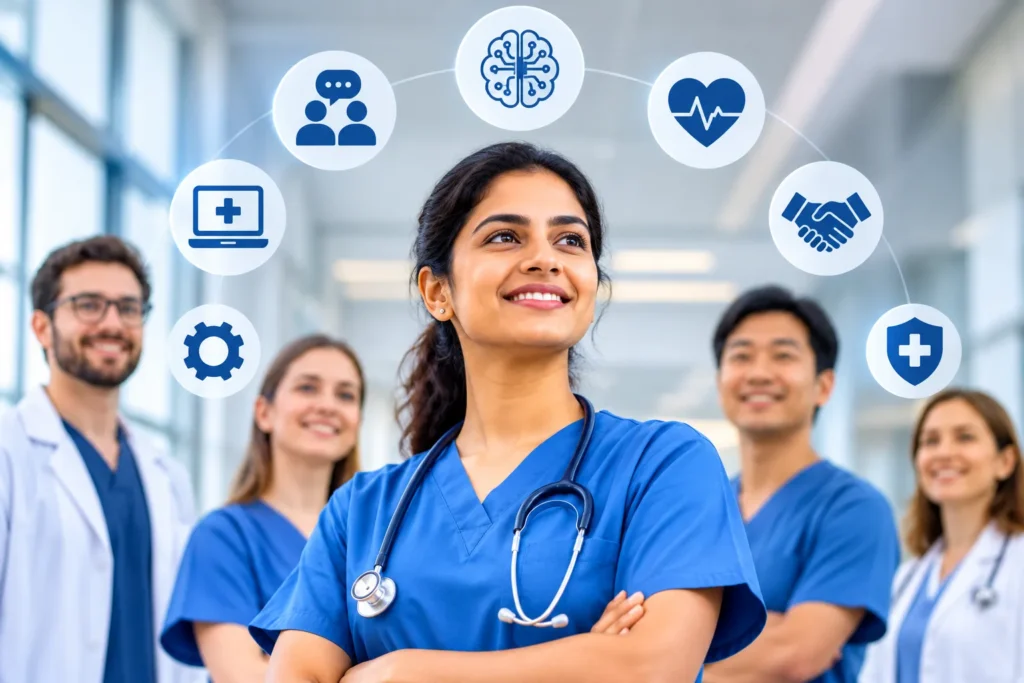
Healthcare is evolving rapidly, and employers now expect more than clinical knowledge. Digital confidence, effective communication, adaptability, and continuous learning are becoming equally important. In 2027, the top skills every healthcare professional needs will help them deliver quality patient care and build a future-ready career.
Why Healthcare Skills Are Changing in 2027
Technological advancements, ageing populations, changing patient expectations, and staff shortages are reshaping the healthcare industry. Clinical expertise remains essential, but healthcare professionals must develop additional skills to keep pace with these changes.
According to the World Economic Forum’s Future of Jobs Report 2025, employers expect 39% of workers’ core skills to change by 2030. This highlights the growing importance of adaptability, digital confidence, and professional development across industries, including healthcare.
Top Healthcare Skills Employers Want in 2027
Employers increasingly value professionals who combine technical expertise with strong interpersonal and problem-solving abilities. The following skills help healthcare professionals provide safe patient care, work effectively with colleagues, and adapt to changing workplace demands.
Clinical Skills for Healthcare Professionals
Strong clinical skills remain the foundation of quality patient care. Employers expect healthcare professionals to demonstrate competence in medication administration, wound care, patient monitoring, infection prevention, and emergency response.
Accurate patient assessment, attention to detail, and timely escalation of concerns are equally important. Professionals must recognise changes in a patient’s condition and respond appropriately. Regular practical training, clinical simulations, and updated knowledge of treatment protocols help maintain these essential skills and improve patient safety.
Digital Skills in Healthcare
Technology is becoming an essential part of modern healthcare delivery. Electronic health records, remote patient monitoring, and digital care systems are changing how professionals manage information and support patients.
The WEF identifies AI and big data, networks and cybersecurity, and technological literacy among the fastest-growing skills. Healthcare professionals should develop confidence in:
- Using electronic health records and digital documentation systems.
- Operating patient monitoring equipment and digital care tools.
- Protecting patient information and maintaining data confidentiality.
- Understanding AI-supported tools while maintaining independent clinical judgment.
Digital confidence helps professionals adapt to modern healthcare environments and deliver more efficient care.
Communication, Empathy, and Teamwork in Healthcare
Healthcare depends on effective communication and collaboration. Nurses, doctors, and allied healthcare professionals regularly coordinate with patients, families, and multidisciplinary teams. Clear explanations, active listening, and accurate handovers help prevent misunderstandings and reduce the risk of errors.
Empathy and cultural awareness are equally important. Patients come from different backgrounds, speak different languages, and have varying expectations of care. The WEF identifies empathy and active listening as core skills, with 50% of surveyed employers recognising their importance. Professionals who communicate respectfully can build trust and improve patient experiences.
Critical Thinking and Adaptability in Healthcare
Healthcare professionals often make decisions in demanding situations where patient needs can change quickly. Critical thinking, problem-solving, and adaptability help them assess situations, prioritise care, and respond appropriately. Recognising early warning signs and identifying potential complications also require sound clinical judgment.
The WEF identifies analytical thinking as the leading core skill, followed by resilience, flexibility, and agility. These capabilities help professionals manage emergencies, unexpected workload changes, and other challenges while remaining effective under pressure.
Lifelong Learning and Upskilling in Healthcare
A healthcare qualification provides the foundation for a career, but learning should continue throughout professional life. Medical guidelines, treatment methods, technologies, and patient care practices constantly evolve.
Healthcare professionals can stay updated through professional courses, workshops, clinical training, mentorship, and feedback. Developing new competencies also creates opportunities to explore specialised roles and take on greater responsibilities. Continuous learning helps professionals remain confident and prepared for changing healthcare requirements.
German Language Skills for Nurses Planning to Work Abroad
For nurses considering an international career, language proficiency is an essential professional skill. According to the WHO’s State of the World’s Nursing 2025 report, one in seven nurses worldwide works in a country other than their country of birth. Germany also faces long-term nursing workforce challenges, with Destatis projecting a potential shortage of 280,000 to 690,000 nursing professionals by 2049.
For Indian nurses planning to work in Germany, learning German from A1 to B2 level is an important step. Generally, B2 German proficiency is required for professional recognition and authorisation to practise as a nurse. Applicants must also complete the applicable nursing qualification recognition process and meet relevant licensing requirements.
To learn more:
Shortage of Nurses in Germany: Opportunities for Indian Nurses
How Indian Nurses Can Start a Nursing Career in Germany
Essential Nursing Skills German Employers Look For
Nurse Salary in Germany: How Skills Influence Career Opportunities
Professional qualifications, language proficiency, work experience, and recognition can influence the employment opportunities available to nurses in Germany.
According to the Federal Employment Agency’s Entgeltatlas, the median gross monthly salary for qualified nursing professionals in Germany is approximately €4,587. The nurse salary in Germany can vary depending on experience, qualifications, employer, location, and working hours. This figure represents the median salary, not a guaranteed starting salary.
As healthcare continues to evolve, professionals who combine clinical expertise with digital skills, effective communication, adaptability, and continuous learning will be better prepared for future opportunities. For nurses planning to work abroad, German language proficiency and professional nursing recognition are equally important. Investing in these skills today can help build a confident and rewarding healthcare career.
Build Your Healthcare Career with Raahi Global
Building a successful international nursing career requires more than clinical experience. It also involves language preparation, documentation, professional recognition, and understanding the recruitment process.
Raahi Global supports Indian nurses pursuing opportunities in Germany through profile evaluation, career counselling, German language training from A1 to B2, document verification, employer matching, and interview preparation. Nurses also receive guidance with visa and licensing procedures, relocation assistance, and post-arrival support.
If you are planning to pursue a nursing career in Germany, speak with a Raahi Global counsellor. Start preparing today and take the next step towards your international career with confidence.